
The question “Do I need heat tape?” usually comes up for one of two reasons. Either a homeowner has already dealt with ice dams after a hard winter, or they want to get ahead of issues before the next one hits. Both are good reasons to ask the question.
Let’s look at seven signs that point to problems that heat tape may solve before another Utah winter arrives.
1. You’ve Already Had an Ice Dam
Ice dams usually happen for the same reasons year after year. The layout of your roof, the exposure of your eaves, and the way heat escapes from the living space below all influence where snow melts and where water refreezes. If your roof has produced ice dams before, it’s likely to happen again under similar conditions unless something changes.
Heating cable installation is the most direct way to change those conditions. It runs a warming cable along the eaves, rakes, valleys, and gutter where ice can build up. The underlying conditions may still be there, but now there’s a clear, warm path for meltwater to keep moving.
Homes with a confirmed history of ice dams aren’t just at risk. They’ve already shown where drainage problems are likely to happen.
2. Your Roofline Grows Icicles Every Winter
Icicles may seem like a normal part of winter, but they can be a warning sign. They form through the same process that creates an ice dam. Meltwater hits a cold surface and freezes before it can drain.
Not every icicle means you have a full ice dam. But if icicles consistently show up along the lower roof edge each winter, it means the freeze-thaw cycle is active there. Water reaches that spot, stops, and refreezes.
Heat tape helps reduce that freeze point by warming problem areas enough to keep water moving. Less refreezing means fewer icicles and, more importantly, a lower risk of ice dams forming behind them.
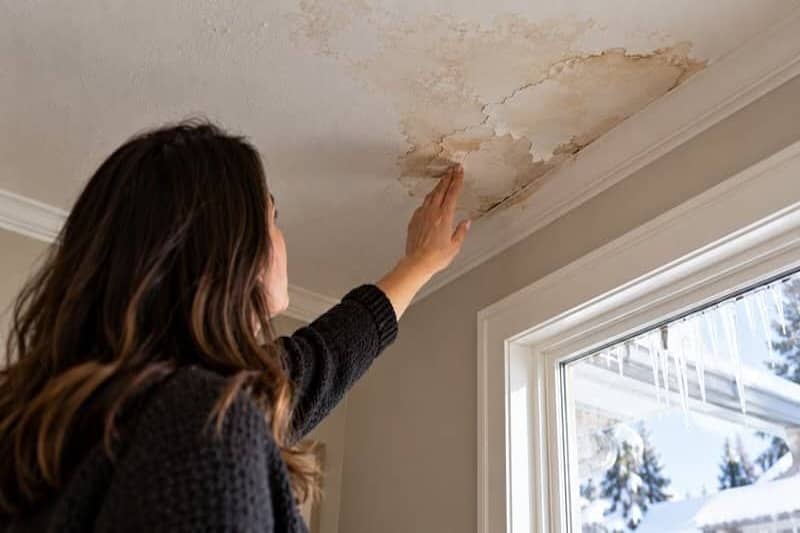
3. Your Ceilings or Walls Show Water Stains
Water stains that show up in late winter or early spring can point to damage from ice dams, especially when there’s no clear plumbing issue. Once water backs up under the shingles, it follows the easiest path into your home. Stains on the ceiling or on walls near the exterior may point to ice dams outside.
By the time you can see water stains inside, moisture has likely already reached the roof decking, framing, or insulation. If the same stain appears or gets worse after each winter, the problem may be ice building up on a specific part of the roof year after year.
Bubbling or peeling paint can point to the same issue. Paint lifts when moisture builds up under the surface. If that happens in the same spot every winter, ice dams may be to blame.
4. Your Gutters Sag, Freeze, or Pull Away
Gutters are made to carry water, not hold heavy ice for long periods of time. When meltwater from the roof backs up into frozen gutters, the added weight can strain the gutter system, mounting hardware, and fascia boards.
That repeated strain can show up as sagging gutters, freezing overflow on exterior walls, or widening gaps between the gutter and the roofline. It can also damage the fascia boards behind the gutters.
Running heat cable through the gutter trough and downspout helps keep the drainage path open. When water can move through the gutter system instead of freezing inside it, there’s less chance of heavy ice building up and stressing the roofline.
5. Your Roof Faces North or Drains Slowly
Roof direction and pitch both affect where ice dams are likely to form. North-facing roof sections usually get less direct sunlight during the day. That means they stay colder and may hold snow and ice longer, making them more prone to ice dams.
Shallow-pitched roof sections also carry more risk. A steep roof helps water to move off quickly. A shallow pitch slows the drainage path, giving meltwater more time to stop and refreeze before it reaches the edge. Valleys and transition areas where a steep roof meets a shallow one can also collect water, creating another spot where ice problems may develop.
If your roof has long north-facing overhangs, low-pitch sections over an addition, or shallow eave runs, it may be worth installing roof heat cable before problems appear.
6. Your Roof Melts Snow Unevenly
After a snowstorm, look at how the snow melts on your roof. Do the upper sections clear quickly while the eaves stay packed with snow and ice? That uneven pattern can point to heat loss from the living space below. As heat escapes through the attic, it can warm the upper roof surface enough to melt snow. This meltwater then runs down toward the colder eaves, where it can freeze again and cause ice dams.
When the upper portion of a roof warms enough to melt snow while the lower edges remain frozen, meltwater can continue running toward the eaves throughout the winter. That water can freeze, melt, and refreeze along the eave line, creating repeated ice dam problems. Heat tape helps by keeping these channels open so meltwater can continue draining instead of refreezing.
7. Your Roof Has Valleys, Dormers, or Complex Angles
A roof valley is the V-shaped area where two parts of a roof meet. Because water naturally flows into this lower section, it can become a common place for snow, meltwater, and ice to build up. Ice dams often form first in valleys, even when the main eave sections are draining as they should.
Dormers can create similar problem areas. The place where the dormer roof meets the main roof can collect water, snow, and ice. These intersections are often shaded or tucked away from direct sunlight, which can make freezing more likely.
Heat tape helps protect these high-risk areas, especially if there’s a history of ice, icicles, or winter water damage.
Spotting the Warning Signs
You don’t need a professional inspection to spot most of these warning signs. Many are visible from the yard, the attic, or a walk through the home after a hard winter. All seven stem from the same water that regularly reaches a freeze point it can’t get past. Heat tape addresses that condition directly by helping meltwater keep moving through areas where ice tends to form.
Our team of heat tape installers serve Ogden, Layton, Farmington, Bountiful, Brigham City, Logan and the surrounding area. Getting on the schedule before the first freeze gives homeowners the best opportunity to complete installation in safer conditions, with more scheduling flexibility and plenty of time to make sure the system is ready when snow and ice arrive.