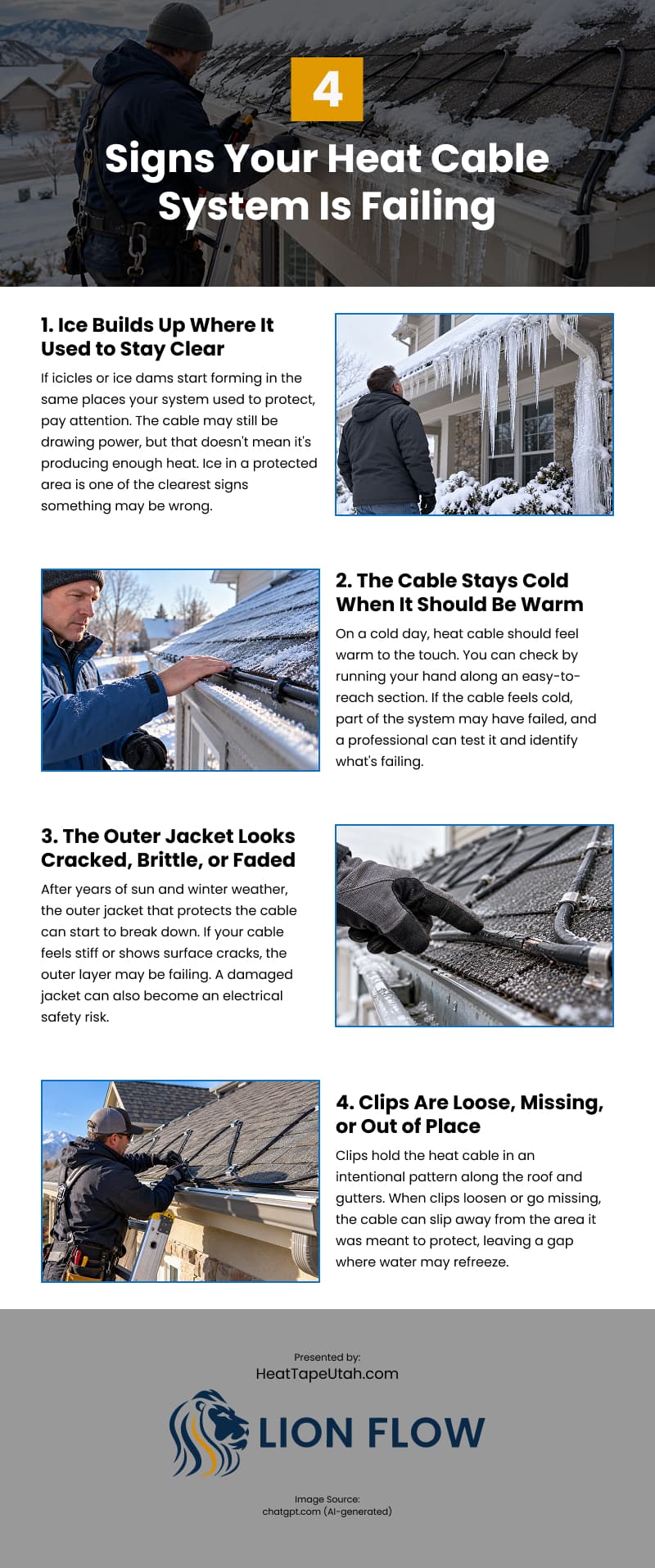
Your heat tape is still sitting on the roof. It’s plugged in. Maybe you even tested it when the weather turned cold. Even though nothing seems to have changed, the ice in your gutters is telling you something different.
Heat tape can gradually lose its effectiveness after years of sun, snow, ice, and temperature changes. The problem may not become obvious until you see ice building up in a gutter or along an eave that used to stay clear.
Before you rely on an older system for another Northern Utah winter, look for these four signs that heat tape removal and replacement may be a wise decision.
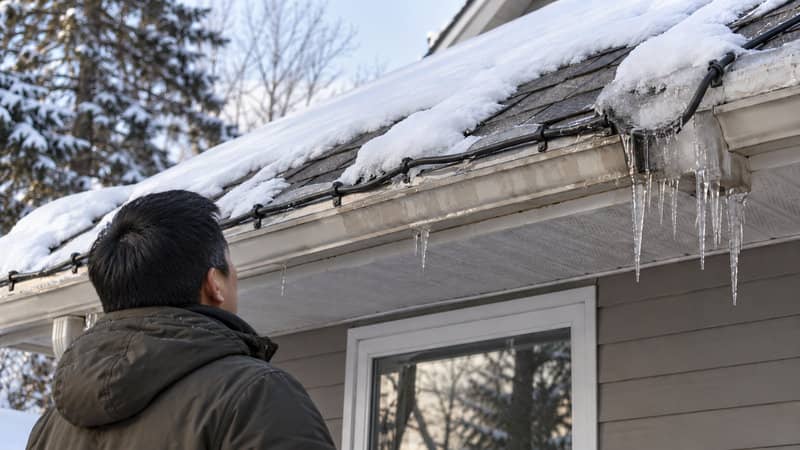
4 Signs Your Heat Cable System Is Failing
1. Ice Builds Up Where It Used to Stay Clear
The main job of a heat tape system is to keep water moving through problem areas. That usually includes eaves, rakes, valleys, gutters, and downspouts.
If icicles or ice dams start forming in the same places your system used to protect, pay attention. The cable may still be plugged in. It may even be drawing power. But that doesn’t always mean it’s producing enough heat to help.
Ice in a protected area is one of the clearest signs that something may be wrong.
2. The Cable Stays Cold When It Should Be Warm
On a cold day, heat cable should feel warm to the touch. You can check that by running your hand along an easy-to-reach section. You don’t have to climb onto an icy roof to test it.
If the cable feels cold, part of the system may have failed. A section of cable may no longer be heating, or the whole run may have stopped working.
A professional can test the system and identify what’s failing.
3. The Outer Jacket Looks Cracked, Brittle, or Faded
The outer jacket protects the cable inside. After years of sun and winter weather, that jacket can start to break down.
If your cable feels stiff or shows surface cracks, the outer layer may be failing. Fading or brittle spots are worth checking, too.
A damaged jacket is more than a performance issue. It can also become an electrical safety risk. If the cable looks worn or cracked, it should be inspected before another winter.
4. Clips Are Loose, Missing, or Out of Place
Clips hold the heat cable in an intentional pattern along the roof and gutters. When clips loosen or go missing, the cable can move out of place.
Heat tape only protects the areas it covers. A cable may still work, but if it has slipped away from the eave, rake, valley, or gutter section it was meant to protect, that can leave a gap where water may refreeze.
A system doesn’t have to be completely dead to stop working well. Sometimes it’s simply no longer where it needs to be.
The Problem With Trusting an Aging System
A failing heat tape system may give you a false sense of protection that’s worse than no system at all.
If you know you don’t have heat tape, you’re more likely to keep an eye on your roof after storms. You may watch for icicles or frozen gutters because there’s no automated prevention system in place.
With a system already in place, it’s easy to assume the roof’s covered. You may stop checking the eaves and gutters because you believe the system’s handling it. That makes early ice buildup easier to miss.
And that’s where damage can sneak up on you.
Ice dam damage often happens slowly. Water can back up under shingles and travel along the roof deck. It may seep into the attic or walls before you see anything inside. By the time you notice a stained ceiling or bubbling paint, the problem may have been going on for weeks.
That doesn’t mean every system failure causes major damage. But it does mean an old system should be checked before you depend on it for another winter.
Why Heat Cable Wears Out
Heat cable isn’t meant to last forever. Because it sits on the roof, it gets exposed to years of sun and winter weather.
Years of sun, snow, wind, and temperature changes can gradually wear down the system. UV exposure can damage the cable jacket, while wind and snow put stress on the clips that hold it in place. The roof also expands and contracts as temperatures change, adding more movement to the system over time.
This wear is normal and doesn’t necessarily point to a poor installation. There’s no set timeframe in which a heat tape system needs to be replaced. Roof pitch, sun exposure, product quality, and winter weather all play a role. A system that looked fine two winters ago may not be in the same shape now, even if it has a long manufacturer’s warranty.
What Heat Tape Removal and Replacement Includes
When an older system does need to be replaced, there’s more to the job than putting new cable where the old cable was. Heat tape replacement requires more than swapping an old cable for a new one.
The process starts with removing the old cable, clips, and accessories from the roof and gutter system.
Once the roof is clear, the installer can inspect the eaves, valleys, rakes, gutters, and downspouts. If any ice built up in past winters, it may have caused damage that isn’t visible from the ground. They’ll check for soft roof decking, loose gutters, worn flashing, or pulled sections of fascia before installing the new cable.
The new heat tape installation layout should follow the way water actually moves off the roof. That may mean cable runs along the eaves, through valleys and rakes, into the gutters, and down the downspouts. A roof-only run may leave gaps if water flows into a cold gutter and freezes there.
If you’re replacing your heat tape system anyway, it’s worth considering an upgrade to self-regulating heat cable and proper controls. They aren’t the same thing, but they work together.
Self-regulating cable adjusts its heat output as conditions change. As the area around the cable cools, the cable produces more heat. When conditions warm up, it produces less heat.
A controller handles a different job. It can turn the system on and off when conditions call for it. Together, the cable and controls help the system run without relying on the homeowner to manage it by hand.
Check Before Winter Does
You can’t always tell whether heat tape is working by looking out the window. An older system may still be in place, but that doesn’t mean it’s ready for another Northern Utah winter.
Check the cable early in the cold season. Look for loose clips, brittle cable, ice in areas that used to stay clear, or sections that feel cold when the system should be active.
If you’re looking for heat tape replacement in Ogden, Logan, Bountiful, or Salt Lake, it’s worth scheduling an inspection before winter. A professional can check the cable and the full drainage path before ice makes the problem harder to solve.
Video
Infographic