
Ice dams are a winter problem, but the solution starts months earlier. The challenge is that many homeowners don’t think about ice dams until they notice a problem. By then, freezing temperatures, snow accumulation, and ongoing melt cycles can make it harder to address the problem.
In Northern Utah, fall is the time to prepare your roof before the first freeze. A roof snow melting system installation is much easier when the roof is clear and weather conditions are still favorable. Planning ahead gives you a better chance of heading into winter prepared.
Where the Melting Starts
Ice dam formation usually starts on the upper part of your roof. That’s where sunlight and attic heat can warm the roof’s surface enough to melt the snow sitting on top.
Even on colder winter days, direct sun can warm the roof. Heat escaping from the living space below can also move into the attic and warm the roof from underneath. When those warmer roof sections melt the snow, water starts running downhill.
That meltwater doesn’t always drain before temperatures drop again. It might freeze at night, melt again the next day, and freeze yet again at night. It can also freeze over cold sections of the roof. This refreezing is what allows an ice dam to grow over time.
Why the Roof Edge Freezes First
The eaves are the horizontal edges of the roof that extend past the walls of your house. Unlike the upper roof, the eaves don’t sit above heated living space. They’re exposed to cold outside air, so they often stay much colder than the rest of the roof.
When meltwater from a warmer upper roof section reaches those cold eaves, it can freeze before it drains away. At first, it may only form a thin lip of ice along the lower roof edge.
But that thin lip can grow. More snow melts during the day. More water runs down the roof. More of it freezes when it reaches the cold edge. Each round of melting and refreezing adds another layer of ice.
Over time, what started as a thin lip builds into a ridge running along the lower edge of the roof. Once it’s tall enough, it blocks water from draining off the roof. This water pools and starts looking for another way out.
How Backed-Up Water Creates Roof Damage
Shingles protect the roof from water that’s flowing down towards the gutters. They do not create a water tight surface that can hold standing water.
When meltwater pools behind a dam, it can reach the gaps and overlaps between shingles. From there, it may work its way under the shingles and reach the roof deck, which is the plywood layer below the shingles.
Wood that stays wet can soften, warp, or rot. In some cases, water can move all the way through the roof deck and into the attic, walls, or living space. Inside the home, that may show up as a ceiling stain, bubbling paint near an exterior wall, or water near the top of a drywall seam.
Moisture that gets inside a wall can also lead to mold. Mold grows well in damp, hidden spaces, especially where insulation holds moisture in place. By the time you see the signs, the repair may be more involved than a simple patch.
Gutters may also take a hit. Ice can build inside the gutter and downspout, blocking the normal drainage path. The ice buildup is heavy and adds strain to the gutters and the fascia, which is the board the gutters attach to. That weight can pull gutters loose or weaken the fascia over time.
Not every ice dam causes significant damage. A small dam in a mild winter might melt away without leaving any lasting damage. But when an ice dam grows through several rounds of melting and refreezing, it creates the conditions where roof, gutter, and interior damage can happen.
Why Fall Is the Prevention Window
The way ice dams form explains why prevention is key. Ice dams usually don’t come from a single cold night. They slowly build as snow melts, runs down, refreezes, and repeats the same pattern again.
By the time you can see an ice dam on the roofline, the process may have been in play for weeks.
Fall is when residential ice dam prevention begins. This is the ideal time to install heat tape because the roof is usually clear and dry and contractors can set up the system before winter weather starts affecting your roof.
When heat tape is installed before the first freeze, the system is ready by the time any melting and refreezing hits. Instead of waiting for ice to form, you already have a warmed drainage path in the areas where water is most likely to stop and freeze.
Once winter is underway, the work becomes harder. You may be actively dealing with snow, ice, leaks, or a dam that’s already growing. At that point, you’re no longer preventing a problem. You’re responding to one.
How Heat Tape Breaks the Cycle
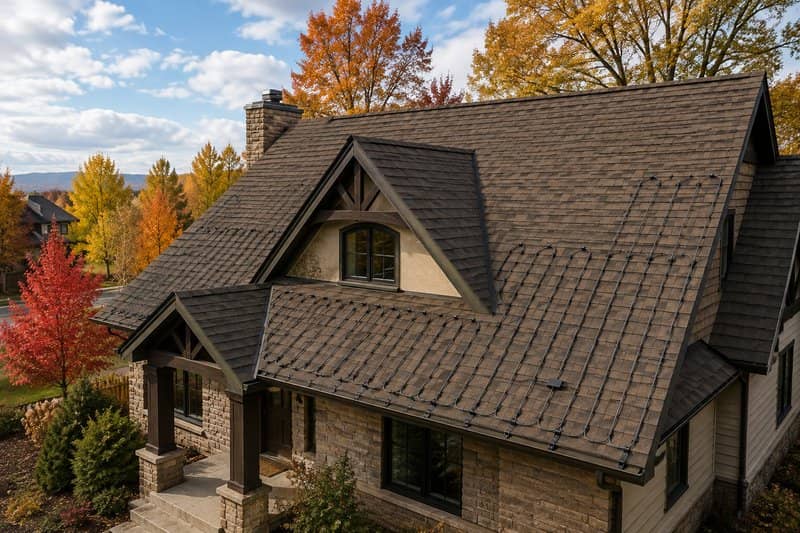
Heat tape, also known as heat cable, runs along the parts of the roof where ice dams commonly start. That often includes eaves, rakes, valleys, gutters, and downspouts.
The cable keeps those areas warm enough to keep meltwater moving. Instead of freezing at the lower roof edge, water can drain into the gutter and out through the downspout.
That clear drainage path is the point of the system. Heat tape isn’t meant to warm the entire roof or melt every patch of snow. It’s meant to keep water moving through the places where ice buildup is most likely to block the roof’s drainage.
Ice dams are a drainage problem. When water has a way off the roof, it’s less likely to back up behind a ridge of ice.
Heat tape doesn’t cover the full roof. For many Northern Utah homes, the most important areas are the roof edges, valleys, gutters, and downspouts. That is where a heat cable system can make the biggest difference.
Stop Ice Dams Long Before They Start
Fall doesn’t last long in Northern Utah. The gap between warm weather and the first freeze can be a matter of weeks, and contractor schedules start filling up fast once homeowners start seeing winter problems.
The cycle of melting and refreezing will start whether your roof is ready or not. What you can control is whether water already has a clear place to drain when that cycle begins.
That’s why preventing ice dams starts in fall, not winter. Scheduling a professional heat tape installation before temperatures drop means you’re ready when the season changes, not scrambling after it does.