
The Freeze-Thaw Cycle That Builds an Ice Dam
Heated by afternoon sun and by warm air rising from the living space below, snow on a Northern Utah roof often melts by day. That water should run off the shingles, through the gutters, and down the downspouts. But that’s not always what happens.
Other areas of the roof may not be as warm as the spots where snow is melting. Valleys, eaves that overhang past the outer walls, and north-facing roof panels may be much colder. When the meltwater hits a cold section, it can refreeze. Leaving a thin layer of ice that gets locked in by freezing overnight temperatures.
The next day adds to it as more snow melts and water refreezes in the same spot. The pattern stacks layers of ice into a ridge known as an ice dam. Meltwater arriving behind the ice dam can no longer get past it, so it pools on the roof surface, working its way into the seams, the overlaps, and the nail penetrations that flowing water passes right over.
Where Ice Dams Cause Damage
The Surface
Repeated freezing, thawing, and movement allow water to get beneath the edges of shingles, lifting or loosening them from the roof. As temperatures change, the ice and shingles expand and contract at different rates, putting stress on the shingles and their seals. It can crack or loosen shingles and create openings where additional water can get underneath the roofing material.
The Structure
Water seeping beneath the surface wets the decking, which softens with repeated exposure to water. Decking, trusses, and framing that stay damp may develop mold or mildew. If they become soft or sag, they may need to be replaced.
The Interior
When water reaches the interior, it causes more visible types of damage. You may begin to see bubbling or peeling paint on the ceiling, stains that spread, or wet insulation in the attic. Moisture that lingers inside a ceiling or wall cavity invites mold, and mold often requires repair or remediation.
The Gutters and Fascia
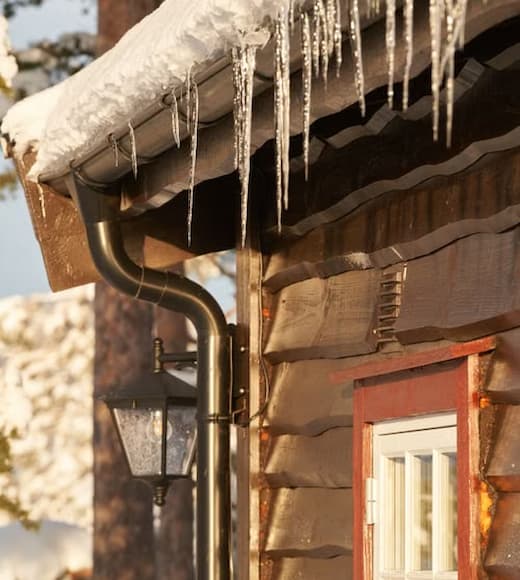
Ice that forms in the gutters puts more weight on them than they are meant to hold. The extra weight can pull gutters off the fascia, and fascia boards can rot after weeks of contact with ice and trapped meltwater. Gutter and fascia protection from ice dams is an important part of a complete prevention system, which is why Lion Flow extends heat cable through the gutters and downspouts rather than stopping at the roof edge.
The Ground
Your gutter system is designed to channel water away from walkways, doorways, and your home’s foundation. When ice blocks the gutters, water can spill over the sides. It may run down siding, refreeze across walkways, or pool against the foundation with every thaw, creating hazardous conditions and potential damage.
A single ice dam may not cause damage in all these areas, but it is likely to begin causing problems in at least one. And it may be so subtle that you don’t see it at first.
Why Ice Dams Keep Coming Back
Ice dams form under very specific conditions. Thus, roofs that provide these conditions are likely to form them. And if your roof forms ice dams once, it is likely that it will happen again, unless you take steps to prevent it.
Roof Design
The roofs that form ice dams typically have one characteristic in common. Their shape.
- Low-pitched eave sections often drain slowly, allowing water to refreeze
- Complex rooflines have more valleys that collect water that may refreeze
- North-facing eaves spend months in shade, holding onto ice through thaws that clear the south side of the house
Heat tape can help keep ice dams from forming on roofs with one or more of these structural characteristics.
Heat Loss
Heat escaping from the home can make the problem worse. If warm air reaches the attic and heats the underside of the roof, snow can melt higher up on the roof while the eaves remain below freezing. The resulting water flows toward the colder edge, where it can freeze and build an ice dam.
Insufficient attic insulation, air leaks, and poor ventilation can all contribute to this uneven roof temperature. Improving the attic environment can reduce the amount of snowmelt reaching the eaves, but it doesn’t change the roof’s shape or eliminate cold areas that are prone to freezing.
Drainage
The gutter itself can make an ice problem worse if meltwater has a long or difficult path to the ground. Long gutter runs give water more time to cool and freeze before it reaches a downspout. If several roof sections drain into one downspout, that exit has to handle a larger volume of meltwater, increasing the chance that ice or debris will restrict the flow.
Downspouts that empty into buried drains can create another vulnerable point if the outlet freezes, because water has nowhere to go once the lower part of the drainage system is blocked.
If ice dams repeatedly form in the same area on your roof or in your gutters, there is usually a reason. Lion Flow can help you figure out which conditions are contributing to the problem. We can also install heat tape in areas where keeping the drainage path open is necessary.
Ice Dam Removal Is the First Step Toward Prevention
If your home already has an ice dam, the first step is addressing the immediate problem. Removing the existing ice relieves the trapped water that is pressing on the roof and prevents further damage.
What removal cannot do is change what happens after the next storm. Your roof’s design, sun exposure, and attic conditions don’t change when the ice melts. The freeze-thaw cycle picks up where it left off as soon as snowy conditions return. That is why removal and prevention work as a sequence rather than as competing options. Ice dam removal addresses the emergency. A heat tape system aims to prevent it.
The homes that need ice dam removal once are clear candidates for a system that prevents it from recurring. Most homes never need the removal step at all. We simply wait for a clear break in the weather so we can install the heat tape on a clear roof.

A Complete Solution Includes the Gutters and Downspouts
A complete ice dam prevention solution treats the roof and the gutter system because it works together to provide a drainage path for meltwater. Heat cable zigzags along the eaves, covers the rakes, follows each valley, and then continues through the gutter trough and down every downspout to the ground.
Systems that stop at the shingle edge leave the coldest stretch of the trip unheated, and melt that refreezes in the gutter backs up against the same eave the roof cable protects. Full coverage is what closes that loop.
A regulator runs the whole system by temperature, switching the cable on as conditions drop toward freezing and off as they warm. The system responds to the weather all season without anyone managing cords or checking forecasts, which is the standard a prevention system should meet: working hardest on the nights nobody is thinking about the roof.
Coverage can also be completed in stages when necessary. A home with roof cable already in place can add the gutter and downspout runs to finish the path, and a home starting from nothing can have the full system designed in one pass. The one-pass version is the stronger play, since the entire path is planned around the same drainage map.
How Lion Flow Builds a Complete Ice Dam Prevention System
Lion Flow designs and installs complete ice dam prevention solutions for homes throughout Cache, Davis, Box Elder, and Weber counties, including the cities of Bountiful, Ogden, Farmington, Layton, Brigham City, and Logan.
The project starts with an assessment of how the home actually moves water. Lion Flow maps eave lengths, roof transitions, valleys, gutter runs, downspout exits, and outlet access before determining the cable layout. The same assessment also helps us determine how much cable your home needs, since two houses on the same street can require very different systems.
We recommend that every system continues through the gutter trough and down each downspout. These runs are an important part of the prevention system because meltwater that reaches a cold, blocked gutter can refreeze and back up toward the roof.
Lion Flow uses self-regulating heat cable with a Thermacord regulator, clips matched to the roof material, and cable guards where the cable turns into gutters and downspouts. The regulator monitors outdoor temperatures and automatically operates the system when conditions call for heat, so you do not have to manage the system based on changing weather.
Whenever possible, we design the roof, gutters, and downspouts as one complete system. However, we can also add gutter and downspout runs to homes with existing cable to complete the drainage path. If heavy existing ice needs to be removed before installation, we schedule that work ahead of the project. We can also help arrange for an outlet to be added in the soffit before system installation.
Get Ahead of the Next Freeze
Prevention only works if it is on the roof before the ice is. That makes spring, summer, and fall ideal times to consider installing heat tape on your roof. You can have your system in place and ready before the first hard freeze of the season.
Contact Lion Flow for a quote on complete roof and gutter ice dam prevention for your home, and make this the last winter you worry about ice dams causing damage to your home.
FAQs
What's the difference between ice dam prevention and ice dam removal?
Removal addresses an active ice dam that’s already built up, relieving water pressure behind it. Ice dam removal protects the home in the short term, but doesn’t stop the next ice dam from forming.
Ice dam prevention typically involves installing a heat tape system to keep a drainage path clear from the roof through the gutters and downspouts, so ice dams don’t form in the future.
Is better attic insulation a substitute for heat tape?
Improving attic insulation addresses one of the factors that contribute to ice dam formation by keeping heated interior air from warming the roof from below. It doesn’t impact the freeze-thaw conditions that cause ice to form on the eaves or in the gutters. Many Northern Utah homes benefit from better insulation and a heat cable system together, since the two solutions address different parts of the problem.
Can ice dams cause mold inside my home?
When an ice dam forms, the water behind it can seep through the roof and saturate ceiling and wall materials. These wet conditions can allow mold to grow, particularly when that moisture sits for weeks. Promptly addressing active ice dam water intrusion and drying the affected area help to prevent mold from taking hold.
How much does ice dam damage typically cost to repair?
The repair cost depends on how long the damage went unaddressed and which systems were affected. Minor ceiling and paint repairs from a contained moisture event will cost less than more extensive repairs, such as replacing roof decking, remediating mold, or replacing insulation and drywall. For some homeowners, the cost of heat cable installation may be a fraction of what a significant ice dam repair costs.
Do I still need heat tape if my home has good attic insulation?
Good attic insulation reduces heat loss through the attic, which can lower the risk of ice dam formation in some homes. However, homes with good insulation but north-facing eaves, complex valleys, or other drainage challenges can still develop ice dams. Lion Flow can assess your specific roof and drainage layout and tell you where the risk is and whether heat cable is a wise addition to your home.
Will heat tape stop the large icicles from forming on my eave?
Heat tape helps keep drainage channels open and can reduce the amount of water that refreezes at the eave. It may not eliminate every icicle under all conditions, particularly during the most extreme freeze-thaw cycles when large volumes of meltwater run toward the eave quickly.
More importantly, heat tape helps prevent the ice dam from building behind the icicles, where it can block meltwater and force it back beneath the shingles.
Are there alternatives to heat tape for ice dam prevention?
Ice dam prevention may include improving attic insulation, improving attic ventilation to keep the roof deck uniformly cold, and air sealing to reduce heat loss from living spaces into the attic. These improvements can be highly effective in homes where the primary driver of ice dams is interior heat loss.
Heat cable addresses the freeze-thaw conditions at the eave directly and is often the most practical option for existing homes where significant attic modifications aren’t feasible or cost-effective.
How soon should I act if I see water stains on my ceiling in winter?
When you see the problem. Water staining on the ceiling directly below an eave during or after a winter cold snap is a sign that water has already made it through the roof system. Getting a roofer to assess the source and a restoration company to dry out the affected area quickly limits the damage from that moisture.
Is ice dam prevention required by building code in Utah?
Utah building code does not require heat tape. Builders use current energy and insulation code standards, but that does not include heat cable. Most homeowners who install heat cable do so after experiencing an ice dam or to proactively protect their home.
Can I use ice melt products on my roof instead of heat tape?
Ice melt chemicals are not a substitute for a permanent prevention system. Chemical ice melt can help open drainage channels during an active ice dam event, but the chemical residue can corrode metal flashings, gutters, and certain roofing materials over time. A heat cable system keeps drainage channels clear throughout the season without chemicals.
How do I know if the bubbling paint on my ceiling is from an ice dam?
When bubbling or peeling paint appears directly below an eave, late in the winter, or shortly after a warming cycle follows a cold snap, it may be from ice dam water intrusion. Leaks from other sources, such as plumbing or a roofing defect above the affected area, are also possible. A roofing contractor can assess the source, but the location directly below an eave and the timing relative to winter cold are the most telling signs.
How do I prevent ice from re-forming at the foundation after roof meltwater runs off?
Water that exits through the downspout needs a clear path away from the home’s foundation to avoid pooling and freezing at grade. Extending downspouts away from the foundation, using downspout extensions or buried drain lines, helps keep discharge water moving away from the home. This is a separate consideration from the roof and gutter heat cable system but is worth addressing as part of a complete winter drainage plan.