
It’s the middle of winter, and you notice paint bubbling on your ceiling. The problem may not be inside your home at all. Bubbling or peeling paint is often one of the first visible signs that an ice dam on your roof is allowing water to back up beneath the shingles. By the time you see problems inside, the damage can be significant. That’s why the best time to prevent an ice dam is before winter even arrives.
So, should heat tape be installed in spring, summer, or fall? Each season offers different advantages. Here’s what you should know before scheduling a heat cable installation.
Why the Season You Choose Makes a Difference
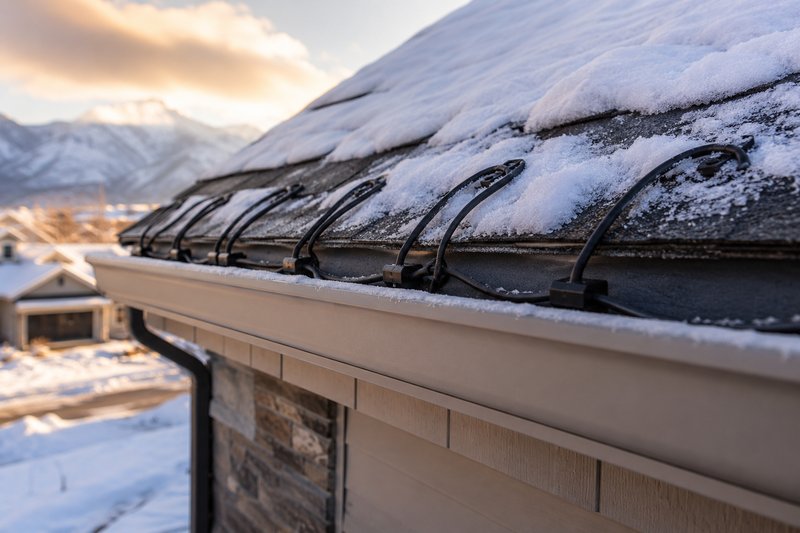
Snow and ice create challenging conditions for heat tape installation. Grip clips need to hook securely beneath each shingle tab, but cold temperatures make shingles stiff and more susceptible to cracking during installation.
Scheduling the work in dry weather with temperatures above freezing allows installers to position cables and clips with greater precision while reducing the risk of damaging the roof. It also provides time to test the system and confirm it is working properly before winter weather arrives.
When does the clock start running out on ideal conditions? In Northern Utah, the freeze-thaw cycle can begin in October at higher elevations and in November in the valleys. This means the off-season installation window might be shorter than you realize. If you want to avoid winter weather, the best bet is to schedule work in the spring or summer.
Booking during the off-season also gives you more control and options, so you can choose a time that works best for your schedule. Fall gets busy for heat tape installers. As temperatures drop, homeowners start calling to get heat tape installed.
Whether you’ve had problems in the past, are in a newly built home, or have been putting off the work, you should act sooner rather than later to avoid the late-fall rush. This gives the installer plenty of time to assess your roof and plan the layout with care.
Spring Offers Flexibility and a Fresh Look at Damage
Spring is the best time to install heat tape from a practical standpoint. If you have had ice dams over the winter, it is a great time to take steps to prevent more damage. Rising temperatures allow installers to access the roof, and any damage you got during the recent winter should still be visible. You can easily spot where ice built up, where gutters took the most weight, and where any damage crept inside the house. Identifying these trouble spots will help your heat cable installers address your specific needs with a custom plan.
Good weather also gives installers plenty of time to work on the roof without worrying about cold weather coming. Also, their calendars tend to be pretty open during the spring, so you can schedule the work when it’s best for you.
Summer Conditions Are Ideal for Installation and Roofing Projects
Getting heat tape installed in summer is also a solid choice. It’s the driest season in Northern Utah, providing the best weather conditions. If you’re planning to get any roofing work done, like replacing shingles, it makes sense to install heat tape at the same time. Running heat cable on a new roof is simpler than retrofitting it later, and the clips go in best on clean, freshly laid material.
It’s usually easier to schedule your install during the summer, too. You’re not fighting against cold weather or a packed calendar. It also gives your heat tape installers plenty of time to test and adjust the system before cold temperatures set in again.
Fall Works Well, Until the Weather Changes
If you can’t get your heat tape installed until fall, don’t worry. Many homeowners wait until fall for good reasons. However, the longer you wait, the less time you have to install and test your system before the first freeze.
Early fall weather conditions are still similar to summer. If you’re in Northern Utah, you should still be in the clear during September or October, while the roof’s still accessible. This timeframe also lets your system run through its first cycle before the real cold arrives, so you can catch any connection or layout issues while conditions are still decent.
The timeline gets tight in November, when dropping temperatures make it harder to work on the roof. You’ll have to fight other homeowners for time on the contractor’s calendar, and you’ll have little to no time between installing your system and using it during the first freeze.
In the fall, earlier is always better. Getting on the schedule early puts you in a comfortable position. Waiting until late fall means racing the weather, with fewer contractors available and less time to address any problems that arise.
Winter Creates Installation Challenges
Although you technically can install heat tape during the winter, it’s not recommended. Snow and ice make it challenging to precisely place clips and route heat cable on the roof.
Freezing temperatures also make asphalt shingles brittle and more prone to cracking during asphalt roof heat tape installation. The cold temperatures make it more difficult to place clips without damaging the roofing material.
If you wait until winter, you also risk ice dams forming under your shingles. Heat tape prevents these, and you can’t install heat tape until you remove any existing ice dams. This adds time, cost, and work to the project. You’ll also need to repair lifted shingles, water damage to the decking, or any other damage caused by the ice dams.
Maybe you moved into a home and inherited an ice dam problem you didn’t know about. Or maybe life got busy. Professional Salt Lake heat tape installers can adapt to winter conditions, but it’s still best to plan the installation during the off-season whenever possible.
Schedule Your Installation Before Demand Peaks
Heat tape installation demand in Northern Utah is usually low in spring and summer, rises through September and October, and spikes in late fall as temperatures drop. Booking in spring or summer gives you the widest availability without any weather issues. Spring adds the advantage of fresh evidence of any ice buildup on your roof.
If you can’t get the install on the calendar until fall, try to book it in September or October to beat the late-fall rush. While it’s still possible to install heat cable during the winter, planning ahead often makes scheduling easier and provides better conditions for installation and testing before winter weather arrives.