
When you picture heat tape, you probably think of a zigzag pattern of cables running across the lower section of a roof. But the eaves are only part of your home’s drainage system. The snowmelt flowing from your roof doesn’t stop at the roof edge. And neither should the heat tape. That’s why gutter heat tape installation should be part of every install.
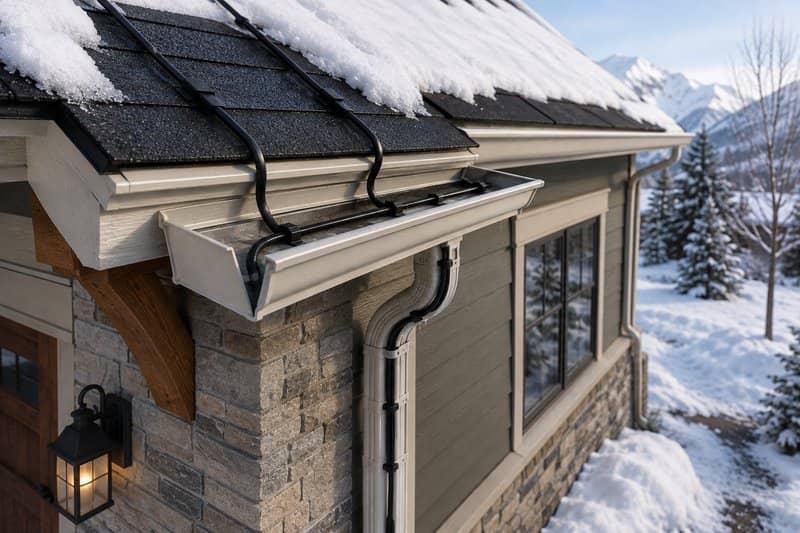
Follow the Water, Not Just the Roofline
The parts of your roof above heated rooms tend to stay warmer. The roof edges, or eaves, are surrounded by cold air. As snow on the upper roof melts during the warmer parts of the day, that meltwater runs down to the colder eaves, where it can refreeze. If ice builds up over time, it can create a dam. The meltwater has nowhere to go, so it can back up beneath your shingles and seep into your home.
Heat tape’s main job is to keep meltwater moving. It helps keep the eaves warm enough for meltwater to keep moving rather than freezing at the roof’s edge.
But the water doesn’t stop there. Once it clears the eaves, it drops into the gutter trough and flows into the downspout, exiting near the foundation. This entire drainage system, including the gutters and downspouts, is at risk of freezing in a Northern Utah winter. That’s why heat tape along the eaves alone isn’t enough.
Why Roof-Only Heat Tape Falls Short
When heat tape only covers the eaves, the risk of ice damage doesn’t go away. It simply moves farther down the drainage path. Meltwater that flows freely off the eaves can refreeze when it hits a cold gutter, causing icy buildup in the gutter trough and downspout.
This creates its own set of problems. The weight of ice can pull the gutters away from the fascia, the board they attach to. The extra weight can ultimately loosen gutters and weaken the fascia. Downspouts blocked with ice can split or crack.
A system that only covers the eaves may miss problem areas higher on the roof, too. Valleys are where two roof planes meet. They funnel water toward the lower areas of the roof. They’re prone to ice buildup because water from two roof sections comes together there. Rakes, which are the sloped sides of the roof, can also collect ice when meltwater freezes along the edge.
What a Complete Heat Tape System Includes
A complete roof and gutter heat tape solution covers the entire path water travels, including:
- Valleys
- Eaves
- Rakes
- Gutters
- Downspouts
The goal is to keep a warm path for meltwater open from the roof to the ground.
When the system is set up this way, there’s no gaps where cold spots can make water stall and refreeze. Meltwater moves off the roof, through the gutter, and away from the house. The gutters and downspouts are less likely to freeze shut, which also protects the fascia and the structural edge of the roof.
A heat tape system doesn’t warm the entire roof. It is possible for ice to form above the coverage area, depending on attic insulation and roof ventilation. Heat tape’s goal is to reduce the risk of ice dams in the areas it protects.
A Thorough Heat Tape Installation Takes More Than Cable
To do its job properly, heat cable needs to be where ice is most likely to form, including along the full length of the gutters and through the downspouts. Proper installation also includes securing the cable in place and protecting it from the sharp bends and metal edges that can cause damage over time.
Gutter separator clips help position the heat tape so it stays where it needs to be instead of bunching up or losing contact with the trough. This helps provide more consistent coverage and reduces the chance of cold spots.
The cable itself needs protection, too. Sharp bends and metal edges can rub against the cable over time, damaging the insulation or the cable underneath. A cable guard acts like a sleeve, protecting the heat tape in areas where it is most vulnerable to wear.
Install Heat Tape Before Ice Blocks the Drainage Path
Don’t wait to get heat tape until your gutters get icy. If you install heat tape before the first freeze hits, you can get ahead of potential problems while the work is straightforward.
Without snow or ice on the roof, installers can fully access the roof and gutter system. They can get a clear read on the roof to map out where heat tape should go without rushing.
Although it’s possible to install heat tape midwinter, installer schedules fill up, making it harder to get the job done.
If you already have heat tape but aren’t sure whether it includes the gutters and downspouts, now is a great time to check that, too. Heat tape installers can extend your existing system to include the gutter run so you don’t have to start over.
Protect the Whole Path from Roof to Ground
The roof edge may get the most attention when you are installing heat tape, but reducing the risk of ice dams also requires protecting the full drainage path from the roof to the ground. That includes installing heat tape in the gutters and downspout, not just along the roof.
Don’t wait until ice blocks your gutters. A residential heat tape contractor in Brigham City can plan and install a complete system before winter sets in.