Ogden sits against the Wasatch foothills, with the Great Salt Lake basin spreading out to the west. That geography helps create winter conditions that can vary widely from one neighborhood to the next. One home may face different snow, shade, and wind conditions than another home just minutes away.
Those conditions make a difference when you’re deciding whether to schedule heat tape installation in Ogden. Ice dam risk depends less on living in Ogden and more on your specific roof: how it faces the sun, how deep the eaves are, where meltwater collects in the valleys, and how much heat escapes through the attic. A professional heat tape installation should account for those details.
Why Ogden Homes Face Different Winter Conditions
Winter can look different from one Ogden neighborhood to the next. Homes that sit higher on the bench may stay colder and get more snow than those on the valley floor.
Roof direction matters too. A sunny slope may melt snow faster. A shaded slope may stay cold for much of the winter. South-facing slopes tend to get more winter sun. North-facing slopes tend to stay shaded longer.
Wind can also make a difference. Some homes sit in more exposed spots than others. Those near the mouth of a canyon often get canyon winds, while those in open areas may face stronger, more consistent winds that can affect how snow accumulates and melts on the roof. When cold wind blows along the roof edge, it can make the eaves even colder and make refreezing more likely.
These differences matter when planning a heat tape system. Rather than using the same layout on every home, an installer can consider the roof’s orientation, elevation, wind exposure, and areas where snow tends to collect when determining where the cable should go.
Your Heat Tape System Should Match Your Roof
Examining your roof is the best place to start any heat cable install. How exposed your roof is to cold air, how deep the eaves are, how many valleys it has, and how much heat escapes through the attic all affect your ice dam risk.
Here’s how these risk factors can contribute to ice dams:
- Deep overhangs leave more of the eaves exposed to cold air.
- Valleys can send meltwater into spots where it slows and refreezes.
- Higher bench homes may see more snow and colder conditions than those in the valley.
- Attic heat loss can melt snow that later refreezes at the eaves.
That’s why two homes in Ogden may need very different heat tape layouts, even if they’re only a mile or two apart.
How Cold Eaves Turn Meltwater Into Ice
When conditions are right for snow to stick, it can build up on the upper section of the roof. Heat escaping from the attic through the roof deck can warm the upper roof above freezing, melting the snow. That meltwater runs down toward the eaves, which extend beyond the home’s outer walls, surrounded by cold air.
When meltwater reaches the cold eaves, it can refreeze before it gets to the gutter. Once ice starts building there, it can block more water from draining. That trapped water can back up under the shingles and reach the roof deck. Wider eaves mean water has a longer stretch of cold to cross before it reaches the gutter. Add with wind exposure, the eaves can get even colder.
Heat tape, or heat cable, helps keep meltwater moving off the roof’s eaves, valleys, and rakes, and then through the gutter and downspout. It doesn’t cover the entire roof, though. Ice can still form above the coverage area, depending on conditions and snowpack.
Why Fall Is the Best Time for Heat Tape Installation in Ogden
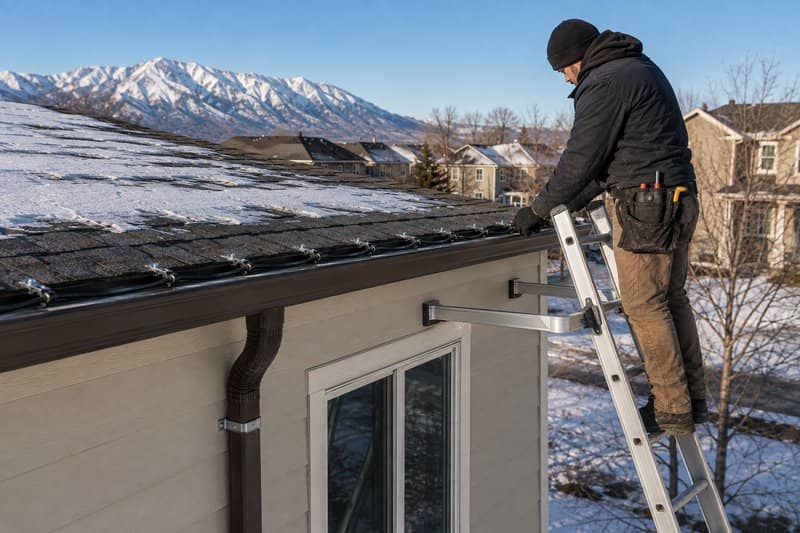
If you’ve decided that heat cable makes sense for your home in Ogden, fall is the right time to have it installed. It’s best to have professionals inspect your roof and complete the installation before the first freeze, which often arrives here in October.
It’s easier to place clips cleanly and lay the cable correctly when the installer can see the surface clearly. There’s less pressure to rush between storms or cold snaps, giving installers time to do the work thoroughly.
Although it’s possible to install heat tape during the winter, it’s challenging. A snow-covered, icy roof creates hazardous conditions for installers and blocks access to the entire roof, including the areas that need heat tape. Getting the system in place before the season starts means it’s ready when the first cold snap arrives, before ice starts forming.
Plan Before the First Freeze
If your home has experienced ice buildup, frozen gutters, or drainage problems in past winters, don’t wait for the next storm to see whether the same thing happens again. Fall gives you an opportunity to look at the roof while it’s accessible and identify areas that need attention before snow and ice arrive.
Scheduling a roof heat cable installation before winter gives you time to address any questions about your existing system. If you already have heat tape, an installer can determine whether it provides adequate coverage or whether the system needs additional cable in problem areas.
The goal is to have the system in place and ready to work before the first snowfall, rather than trying to solve an ice problem after it has already developed.
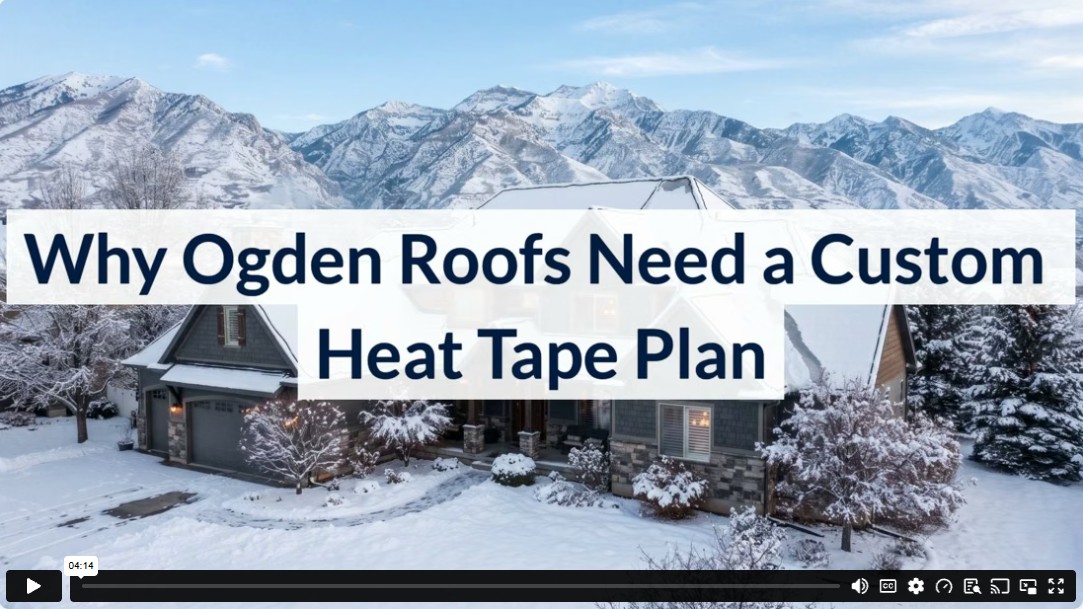
Video
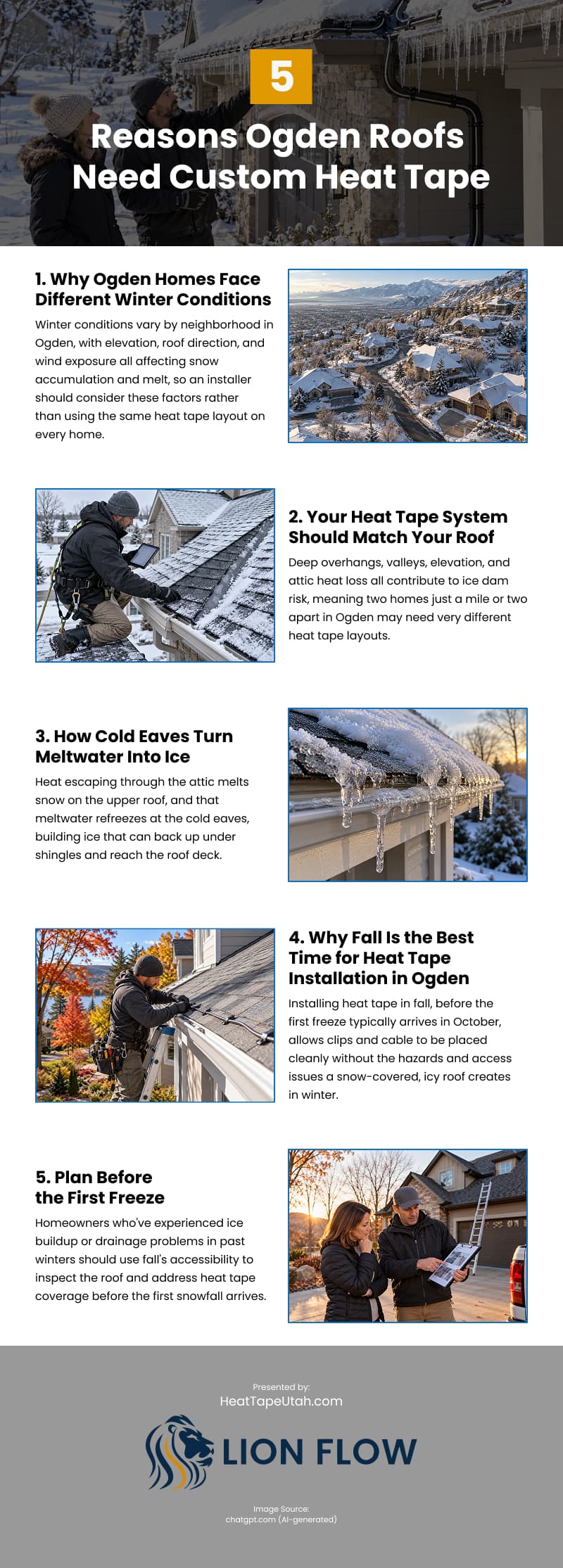
Infographic