
Layton stretches from the valley floor near the freeway up through bench neighborhoods and into the Wasatch foothills. Winter doesn’t treat every part of the city the same. Winter can be very different at a home on the upper bench and a home closer to the valley floor.
That difference can influence your plan for installing heat tape on your roof. The right system depends on the winter you actually get, not just your Layton address.
For homeowners looking into professional heat tape installation in Layton, the first step is to understand how your roof handles snowmelt and cold.
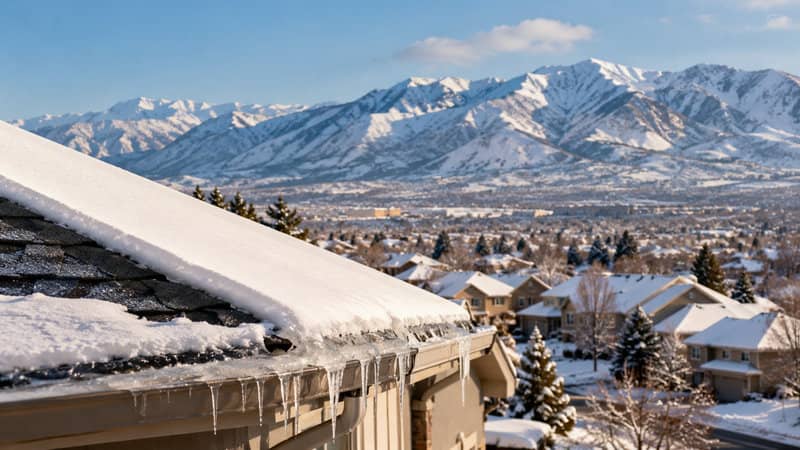
How Elevation Affects Winter Conditions in Layton
Elevation varies widely across Layton neighborhoods. Snow tends to stick around longer for homes higher on the bench than for those on the valley floor.
Lingering snow gives your roof more to manage.
After a storm, snow may melt during a warmer stretch and refreeze when temperatures drop again. Each round gives ice another chance to form along the eaves and inside the gutters. A roof that sees more snow through the season may also see more chances for ice to build up.
The accumulated snow sets the workload. The next question is what the cold does with that snow.
When Inversions Change the Pattern
Northern Utah winters often include inversions, in which cold air settles into the valley while warmer air sits above it. When an inversion settles in, it can flip the pattern for Layton homes.
A home on the upper bench may get warmer afternoons, while a home near the valley floor stays locked in colder air. Both situations can lead to ice, but they do so in different ways.
On the bench, snow may soften during the day and refreeze overnight. Meltwater runs toward the cold roof edge, then freezes when temperatures drop.
In the valley, snow may sit for days while cold air stays trapped. Once the inversion breaks, that stored snow can melt quickly. If the gutters are still frozen, that meltwater has nowhere to drain. It can collect at the edge of the roof and start building a dam.
Either way, the problem is the same. Water freezes where it should be draining. The timing depends on the address.
New to Utah Winters? Start Here
Layton sits near Hill Air Force Base, which means the city has a steady stream of new residents facing their first Utah winter. Some have never heard of ice dams before, much less used heat tape to help reduce the risk of water damage.
Here’s the simple version.
Ice dams form when meltwater runs down the roof and refreezes at a colder edge, like the eaves. As ice builds up, it can block water from draining into the gutters. That trapped water may back up under shingles and reach the roof deck or ceiling below.
Heat tape is a heating cable installed where drainage paths need help staying open. The goal is to help water run off the roof rather than freeze at the edge.
Heat tape on the roof alone may not be enough if the water drains into a frozen gutter. In that case, the blockage just moves a few inches downhill. A stronger system follows the water. It helps keep the drainage path open from the roof edge through the gutter system.
Self-regulating heat cable adjusts its heat output as conditions change. As the area around the cable cools, the cable produces more heat. When conditions warm up, it produces less. With the right controls, the system can run when conditions call for it without the homeowner having to manage it by hand.
Self-regulating heat cable can support residential ice dam prevention by keeping meltwater moving through areas where it is likely to refreeze.
Why New Layton Homes Still Get Ice Dams
Newer homes often have better insulation and tighter attic construction, which can reduce the amount of heat reaching the roof deck. That can lower one of the common causes of ice dams, but it doesn’t eliminate the problem.
However, newer homes can also have more complicated rooflines, and those shapes can create places where snow and meltwater behave differently from the rest of the roof. Valleys collect runoff from multiple roof sections. Lower-pitched areas can drain more slowly, while dormers and other roof transitions can create areas where snow and ice linger.
Those features can create trouble even when the attic is well insulated. Snow can melt as temperatures rise, then the resulting water can move into a colder section of the roof and refreeze. If that happens repeatedly, ice can build up where the roof changes direction or where drainage slows.
In other words, better insulation can reduce the heat coming from inside the home, but it can’t change the way a complicated roof handles snow and meltwater. That’s why newer Layton homes can still have ice-dam problems, and why the roof’s shape and drainage paths matter when deciding whether heat tape is needed.
New Homes Usually Don’t Include Heat Tape
Heat tape usually isn’t part of standard new-home construction, so many new homes don’t come with it unless the homeowner asks for it.
That can surprise people who move into new construction and assume the roof is ready for winter. A home can pass inspection without a heat tape system. The roof can be brand new and still have areas where meltwater refreezes.
Some homeowners don’t realize that until the first bad winter.
Plan the System While the Roof Is Clear
Where your home sits on Layton’s slope affects your risk of ice dams. But your plan for preventing them starts with the roof itself.
After a storm, make note of where snow lingers and which gutters freeze first. Those clues show where you may need heat cable.
The best time to plan is before the roof is icy. Clear roof surfaces make it easier to see the layout and test the system before winter settles in.
From the valley floor to the upper bench, roof heat tape installation should be customized for the roof and drainage path it needs to protect so the system is ready before ice starts to build.