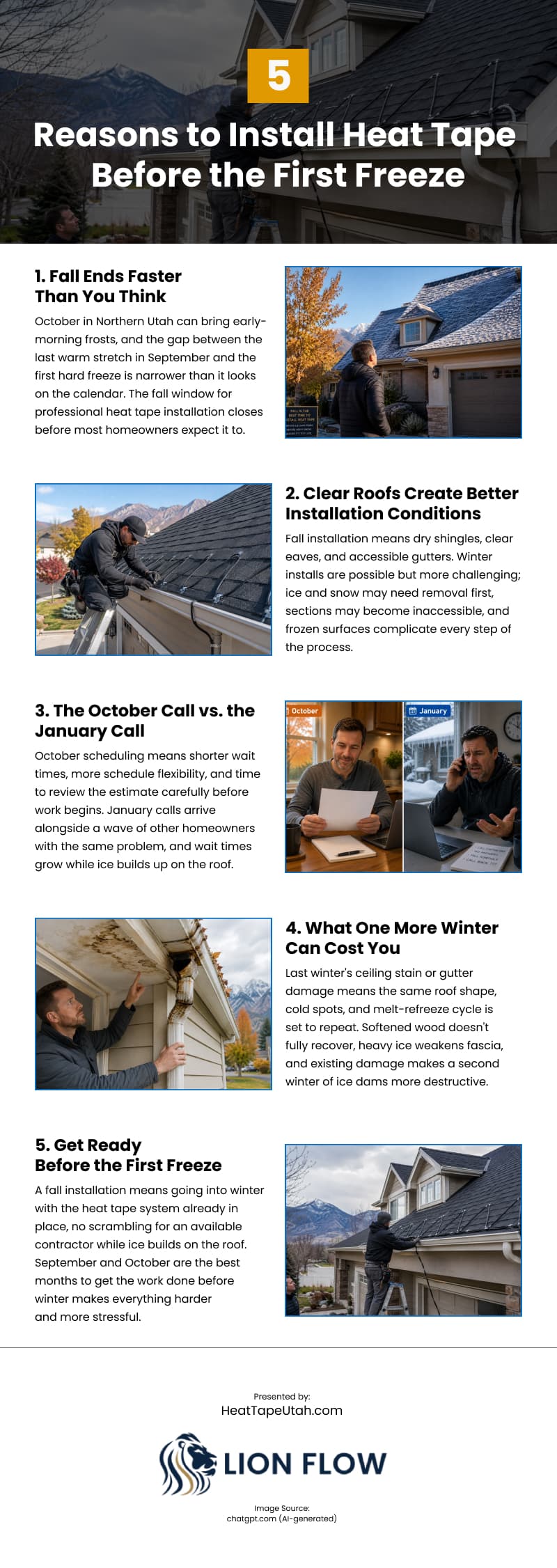
Did last winter leave you with icicles along your roofline, water stains on the ceiling, or ice buildup along the gutter edge? If so, you may have had ice dams on your roof. The bad news is that if you haven’t addressed the underlying problem, they’re likely to return this winter. The good news is that fall is the perfect time to schedule a roof snow melting system installation before the first freeze.
Fall is one of the best windows for professional heat tape installation in Northern Utah because installers can access roofs and have more open schedules. You get the added bonus of knowing you’ve addressed a potential problem before freezing temperatures arrive.
(Anurag Jamwal/pexels)
Fall Ends Faster Than You Think
October in Northern Utah can bring early-morning frosts, and the first hard freeze often arrives sooner than people expect. The gap between the last warm stretch in September and the first real cold is narrower than it looks on the calendar.
The ideal time to install heat tape is during that fall gap. Professional heat tape installers can work more easily on a clear roof, check the gutters and downspouts before they freeze, and install the system before meltwater starts backing up under the shingles. Instead of reacting to a winter problem, you’re putting residential ice dam prevention in place while there’s still time.
Getting the work done before the first snowfall means you can start winter with one more problem handled. You won’t have to wait for clear weather again in the spring.
Clear Roofs Create Better Installation Conditions
When you install heat tape in the fall, the roof is clear of snow and ice. Shingles are dry. Access is straightforward. The heat cable can be installed correctly without having to work around existing ice or frozen surfaces.
That matters more than it might seem. To do a thorough job, heat tape installers need access to the eaves, valleys, gutters, downspouts, and other problem areas. When conditions are good, the job can proceed smoothly from start to finish, with fewer weather-related problems.
Winter installs are possible, but they are more challenging. Ice and snow may need to be removed before work can start. Ladder placement gets complicated against a slick, frozen surface. Some roof sections may be inaccessible until conditions improve.
The October Call vs. the January Call
October can be the sweet spot between a busy summer and the winter rush for heat tape contractors. When you reach out in the fall, you can usually get an estimate and a job on the calendar with good lead time. You can go into winter knowing your roof is ready.
When you make the call in October, you avoid the wait times. You’re done with your heat tape installation long before the busy season starts. Fall also gives you time to make a careful choice. Instead of rushing, you can ask what the estimate covers and understand the work before it starts. It’s a more deliberate and relaxed process
If you wait until January when you notice ice buildup or feel it’s time to prioritize fixing the problem, you’re probably not the only one. As more homeowners seek to address the issue, wait times grow. Jobs that need doing start to outnumber the available slots.
In January, you may face a longer wait while more ice forms on the roof. It’s one more pain and headache to add to the busy start of a new year. The biggest question often becomes who can come out soonest to fix a steadily growing problem.
What One More Winter Can Cost You
If you have a ceiling stain or gutter damage from last winter, this fall isn’t just a convenient time for installation. It may be the best chance to break the pattern before it repeats. You’re dealing with the same roof shape, cold spots, and melt-refreeze cycle. That leaves your roof vulnerable to additional or recurring damage during another winter without actively addressing those risks.
Damage can also add up over time. Once water gets into a roof system, it’s not the same. Softened wood dries out but doesn’t fully recover. Heavy ice loads weaken fascia. If ice dams happen again the next winter, your roof may already be weaker than it was the first time. Old damage doesn’t reset between seasons.
You don’t know what kind of winter is coming. It might be mild, or it might be harsh and lead to issues. Instead of waiting to see, it’s wise to act now and prepare by getting heat tape installed on your roof, gutters, and downspout.
Get Ready Before the First Freeze
If you’re debating whether to install heat tape, the best plan is to choose sooner rather than later. A fall installation means you’re not scrambling in the middle of winter for an available spot while ice builds up on your roof. You can spare yourself unnecessary stress by getting the job done while conditions are right and going into winter with your heat tape system in place.
In Northern Utah, September and October are not just good times to think about heat tape. They are the best time to get the work done before winter makes everything harder. When you schedule heat tape installation before the first freeze, your roof is ready for whatever winter brings.
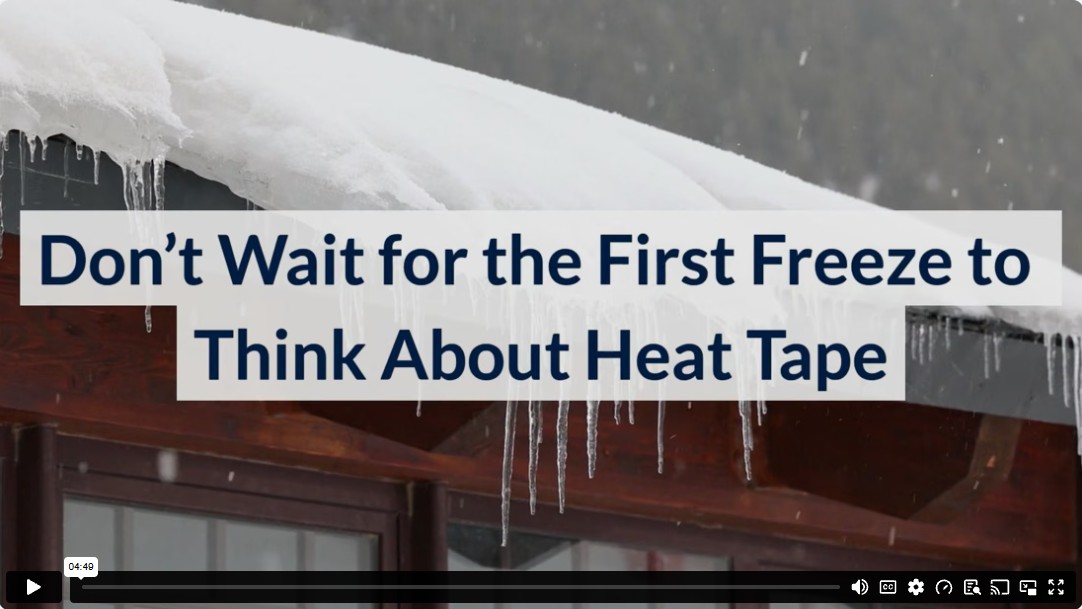
Video
Infographic
Fall is the best window for heat tape installation in Northern Utah, and it closes faster than most homeowners expect, leaving less time to act than the calendar makes it look. Find out the reasons to install heat tape before the first freeze in this infographic.